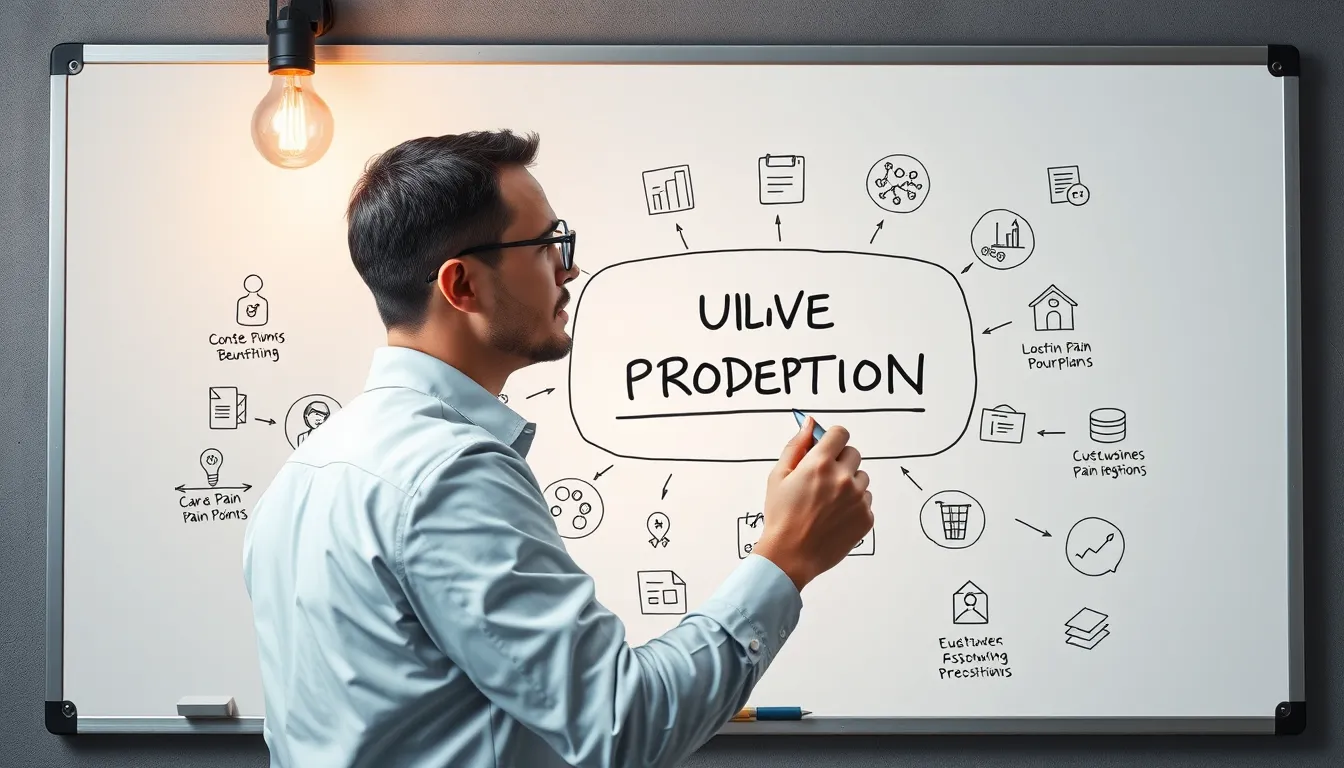
If you struggle to articulate why customers should choose you over competitors, you need a clear Unique Value Proposition. This guide provides a practical framework for building a UVP that resonates with your Target Audience. You will learn to identify specific Pain Points, define distinct Benefit structures, and isolate your core Differentiator.
By the end, you will have a polished Value Statement that acts as a strong Brand Promise. The process covers research, drafting, and validation. No fluff, just actionable steps to create messaging that converts interest into loyalty.
Define the Core Elements of a UVP
A UVP is a concise declaration of why a customer should choose you over alternatives. It is not a slogan or a mission statement; it is a strategic tool that clarifies your offer. To build one that works, you must understand its three foundational components.
First is the Target Audience. A UVP fails if it tries to speak to everyone. You must identify the specific group of people facing a particular problem. By narrowing your focus, you ensure your message feels relevant and personal. Without a defined audience, your Value Statement becomes generic noise that no one trusts.
Second is the Benefit. This is the tangible outcome your customer receives. Focus on the result, not the features. Customers do not buy hammers; they buy holes in walls. Clearly articulating the primary Benefit helps prospects visualize the improvement in their lives or business. This element transforms abstract product details into concrete value.
Third is the Differentiator. This explains why you are the best choice to deliver that benefit. It could be speed, quality, price, or a unique methodology. In a crowded market, stating the Differentiator prevents confusion. It gives the customer a clear reason to pick you, reducing decision fatigue and building immediate credibility.
These three elements work together to create a powerful Brand Promise. The audience sets the context, the benefit defines the value, and the differentiator justifies the choice. When these parts are missing or vague, the UVP loses its impact. Clarity in these areas ensures your messaging cuts through the noise, making it easier for potential clients to understand exactly what they get and why it matters to them specifically.
Gather Insight: Knowing Your Audience and Their Pain
After you’ve outlined what the UVP will contain, the next step is to dive into the heart of the customer—what they feel, what they need, and why they care. A solid UVP is built on real insight, not guesswork.
Start with surveys that ask open‑ended questions about the problems they face, the outcomes they chase, and the solutions they’ve tried. Keep the questionnaire short, focusing on pain points, emotional triggers, and decision drivers.
Follow up with in‑depth interviews to dig deeper into those responses. Use a conversational tone, let the interviewee narrate their story, and probe for specific moments of frustration or delight. Record and transcribe these sessions so you can spot patterns and uncover hidden motivations.
Parallel to qualitative work, pull in data analysis from existing sources—support tickets, social media sentiment, or industry reports. Quantify how often certain pain points arise and what solutions people gravitate toward. This hard data grounds your narrative and helps prioritize which issues matter most.
With these layers of insight, create customer personas. Each persona should encapsulate a segment’s key pain points, desired outcomes, and buying motivations. Use the personas as a living reference when drafting the UVP, ensuring every benefit and differentiator speaks directly to the right people.
Identify What Sets You Apart
Once you understand who you are selling to, shift focus inward and outward to pinpoint what makes your solution distinct. This phase requires balancing an objective view of the competitive landscape with an honest assessment of your internal capabilities. Avoid relying on vague claims like “excellent service” or “high quality.” Instead, identify specific, verifiable attributes that create a clear gap between your offering and the alternatives available to your Target Audience.
Start by mapping your direct competitors. List their primary Value Statements and note the specific Differentiators they highlight. Look for gaps in the market where customer needs are underserved or where current solutions are overly complex. Simultaneously, conduct an internal audit of your brand’s assets. What processes, technologies, or expertise do you possess that competitors lack? Are there unique operational efficiencies or proprietary methods that reduce cost or increase speed for the buyer?
True differentiation often lies at the intersection of these two analyses. It may not be a single feature, but a specific combination of factors. For example, a software provider might offer standard analytics (commodity) but pair it with dedicated onboarding support (service) and a specialized industry database (asset). This unique blend becomes the core of your Brand Promise. Ensure that this Differentiator is sustainable. If a competitor can easily replicate it, it is not a long-term asset. Focus on elements rooted in your company’s history, culture, or specialized knowledge that are difficult to imitate.
Document these findings in a clear list. Each item should be a concrete fact, not an adjective. This inventory serves as the raw material for crafting a compelling UVP. By grounding your differentiators in reality, you ensure your final message resonates with credibility and specificity, moving beyond generic marketing language to deliver a tangible Benefit that justifies the customer’s choice.
Crafting the UVP Statement
With your research in hand, structure the statement to address the Target Audience directly. A strong Value Statement follows a logical flow: identify who it is for, acknowledge their primary Pain Point, and present your specific solution. The core of the message must highlight the primary Benefit they gain. This Benefit should be tangible, such as saving time, reducing cost, or improving quality, rather than abstract concepts.
Tone is critical for resonance. Write in the second person, using “you” to create an immediate connection. Avoid corporate jargon or industry buzzwords that dilute clarity. Instead, use plain, active language. A weak UVP might say, “We offer synergistic solutions for market optimization.” A strong UVP says, “We help small retailers reduce inventory waste by 20% with simple tracking tools.” The latter is specific, credible, and actionable. It clearly defines the Differentiator.
Keep the statement concise. Aim for one or two sentences that can be read in under ten seconds. Every word must earn its place. If a phrase does not clarify the Brand Promise or the Benefit, remove it. This discipline ensures the message cuts through noise. The goal is not to impress with vocabulary, but to communicate value instantly. When the reader finishes the sentence, they should immediately understand why your product or service is the right choice for their specific needs.
Validate and Iterate
A polished UVP is a hypothesis, not a conclusion. Real-world performance determines its true worth. Treat your initial statement as a starting point for a continuous cycle of testing and refinement.
Start with direct feedback. Present the Value Statement to a small group from your Target Audience. Observe their reaction. Do they nod in recognition or look confused? Ask specific questions about the Pain Point addressed and the Benefit highlighted. This qualitative data reveals whether the Differentiator resonates emotionally or logically.
Simultaneously, run quantitative tests. Use A/B testing on landing pages or ad campaigns. Create two variations that differ only in the UVP. Track engagement metrics like click-through rates and conversion percentages. If one version outperforms the other, analyze why. Does it use clearer language, or does it emphasize a stronger Brand Promise?
Monitor long-term performance metrics too. Watch for changes in customer acquisition costs and retention rates after deploying the new UVP. A strong proposition should reduce friction in the buying process.
Establish a regular review cadence. Markets shift, and new competitors enter. Revisit your research annually or when significant changes occur in your industry. Update the UVP to reflect current realities. This iterative approach ensures your message remains relevant and compelling over time.
Avoid treating the UVP as static. A living document that evolves with feedback maintains its power. By consistently validating against real user behavior, you ensure the promise you make is one you can keep, fostering trust and loyalty.